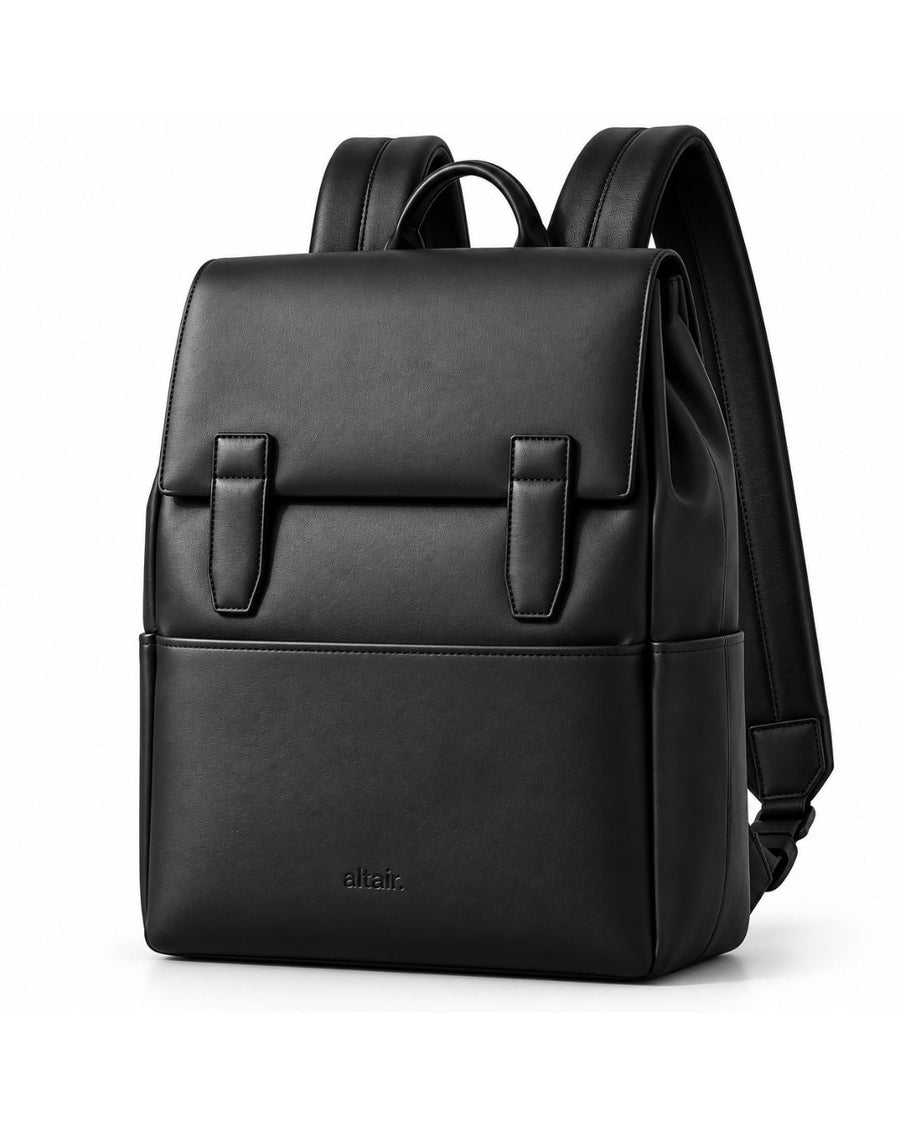



Posted by ALTAIR Redaktion
on October 03, 2026

Your body has an internal clock — and it cannot be reset by a cabin announcement. Cross five or more time zones and you pay for it with fatigue, gaps in concentration and lying awake at night. Jet lag cannot be avoided entirely — but it can be halved. Here is how.
Why east is harder than west
The internal clock naturally runs slightly slower than 24 hours. That is why it is easier to lengthen the day (flying west: the USA) than to shorten it (flying east: Asia). Rule of thumb: roughly one day of adjustment per time zone — rather longer when heading east. Knowing that, you do not schedule important meetings for the day you land after a flight to Asia.
Before the flight: pre-set the clock
- Two to three days beforehand, shift your bedtime by 30–60 minutes a day towards destination time.
- Start well rested: boarding a plane already exhausted amplifies every effect.
- Set your watch to the destination at boarding — from then on your head thinks in destination time.
On board: the frequent flyer routine
- Sleep by destination time, not by the in-flight schedule: if it is night at your destination, you sleep — mask on, headphones in, skip the meal. If it is daytime there, you stay awake.
- Water instead of wine: cabin air is drier than the desert, and alcohol and caffeine both worsen dehydration and disrupt sleep. A glass of water an hour is the best onboard medicine.
- Bring your evening routine with you: brush your teeth, wash your face, take your lenses out — give your body its usual sleep signals and you will sleep even in row 34. A compact toiletry bag in your carry-on turns the onboard bathroom into a ritual (note: everything under 100 ml — the rule in detail).
- Movement: stand up every two hours and circle your feet — good against heavy legs and good for circulation.
After landing: light is the lever
Nothing resets the internal clock as powerfully as daylight:
- Arriving in the morning: get out into the light, walk, stay awake until early local evening. No nap longer than 20 minutes.
- Arriving in the evening: dimmed light, a light meal, straight into the local rhythm.
- Meals as a metronome: eat strictly at local times — your digestive system has a clock too.
- Melatonin can help on eastbound flights (in the evening by destination time) — but the dosage belongs in a conversation with your doctor or pharmacist.
The short version
- ✔ Beforehand: shift bedtime towards the destination, start rested
- ✔ On board: live in destination time, drink water, keep your evening routine with your toiletry bag
- ✔ Afterwards: seek daylight, eat at local times, no long naps
And travelling carry-on only shortens the travel day twice over: no waiting at the belt, into bed sooner — our 20-minute packing method shows you how.